Is magnesium cream good for arthritis?
The honest, short answer: not for the reason most people think. There is a real, evidence-backed link between magnesium and joint health, but it comes from magnesium levels in the blood and diet, not from rubbing magnesium onto the skin. No published clinical trial has tested a magnesium cream, oil or spray specifically for arthritis pain, and the best available science on whether magnesium even crosses the skin in meaningful amounts is contested at best. If a product's whole pitch is "magnesium cream for arthritis," that pitch is running ahead of the evidence.
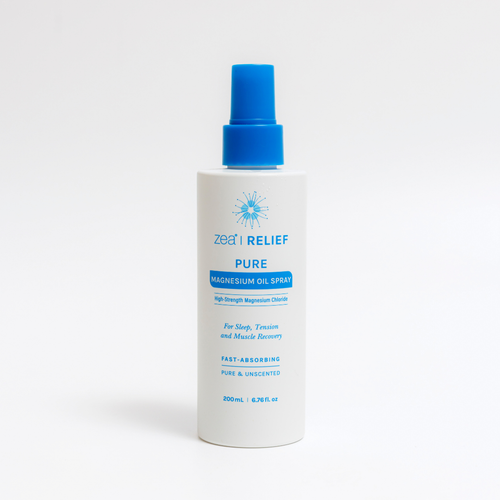
That does not make magnesium cream useless. It has a genuine, different job: many people find the act of massaging a cool, slightly tingling oil into a tired shoulder or an aching calf comfortable, and magnesium is one of the more pleasant-feeling options for that. It is a muscle comfort and recovery product, not a joint-disease treatment, and the two claims should not be confused. This article separates what is established from what is marketing, and points to the one topical product in Zea's range that is actually registered to make an arthritis-related claim, in the exact wording its listing allows.
Key takeaways
- No clinical trial has tested a topical magnesium cream, oil or spray for arthritis. The magnesium-arthritis link in the research is about blood magnesium levels and diet, not skin application.1
- A 2017 review in the journal Nutrients concluded the promotion of transdermal magnesium absorption is "scientifically unsupported," because magnesium ions do not readily cross intact skin.2
- A Cochrane review of topical rubefacients (skin-warming rubs, the category magnesium oil behaviourally resembles) found the evidence "does not support" their use for chronic musculoskeletal pain, and found no evidence at all for rubefacients containing ingredients other than salicylates.3
- In Australia, only medicines listed on the Australian Register of Therapeutic Goods (ARTG) may carry a joint-pain or arthritis-related claim. Zea's Magnesium Oil Spray is a cosmetic product and is not on the ARTG, so it carries no arthritis claim.
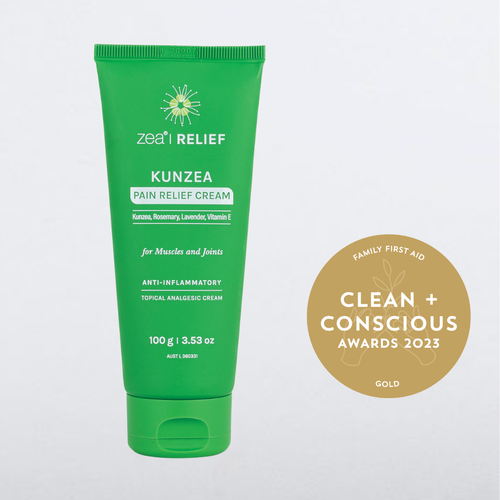
- Zea's Kunzea Pain Relief Cream is registered with the ARTG as a listed medicine (AUST L 360 331), and its permitted indications include relief of mild arthritis and mild osteoarthritis, and mild joint pain and soreness.
What the research actually shows about magnesium and joint pain
Magnesium is a genuinely important mineral. It is a cofactor in hundreds of enzyme reactions, and low magnesium status has been linked to a range of musculoskeletal outcomes. The strongest evidence sits at the level of blood (serum) magnesium and dietary intake, not skin application.
A systematic review and meta-analysis published via the MOOSE guidelines pooled six studies covering more than 15,700 participants looking at magnesium and knee osteoarthritis.1 It found something specific and worth sitting with: people with higher serum magnesium levels had a significantly lower risk of knee osteoarthritis (odds ratio 0.84), with the strongest protective association in the highest serum quartile (odds ratio 0.72). But higher dietary intake of magnesium was not significantly associated with lower osteoarthritis risk on its own (odds ratio 0.80, not statistically significant). Higher magnesium intake was linked to a meaningfully lower fracture risk in people who already had knee osteoarthritis.
Two things follow from that. First, the magnesium-and-joints story is real, but it is a story about the mineral's role in the body over time, most likely linked to how magnesium affects inflammation, cartilage matrix and bone density, not about anything applied to the skin in the moment. Second, and just as important: that review, like every other one we could locate, did not test topical or transdermal magnesium at all. It measured what was in the blood and what people ate. Extending its conclusions to a cream is a leap the research itself does not make.
Does magnesium even absorb through the skin?
Before asking whether a magnesium cream helps arthritis, there is a more basic question: does topical magnesium get into the body in any meaningful amount? The honest answer is that this is genuinely disputed among researchers, and the more rigorous reviews lean sceptical.
The most cited review on this question, published in Nutrients in 2017, examined the physiology and the available human studies and concluded that the marketing claims behind "transdermal magnesium" are not backed by the evidence.2 Magnesium ions are charged particles, and the outermost layer of skin (the stratum corneum) is built to keep charged particles like that out. The only realistic entry points are hair follicles and sweat glands, which together make up a very small fraction of total skin surface. The review's authors were direct about it: "we cannot yet recommend the application of transdermal magnesium," and they specifically flagged that intensive marketing of topical magnesium risks distracting people from oral supplementation, which does have a genuine, well-documented way of raising magnesium levels when a person is actually deficient.
Other researchers disagree, at least partially. The distinction that matters here is this: a cream doing something nice for the skin itself is a different claim to a cream fixing an internal magnesium shortfall, and it is a different claim again to a cream treating a joint disease. None of the credible research on skin absorption gets anywhere near "helps arthritis."
What is actually happening when a magnesium spray feels good on a sore joint

People who use magnesium oil on an aching knee or shoulder often do feel something, and that experience is real even though the disease-modifying story is not established. A few genuinely documented mechanisms are worth naming, because they explain the sensation without requiring magnesium to be absorbed into the joint itself.
The physical act of massage increases local blood flow and can temporarily ease muscle tension around a stiff joint, independent of what is in the product. Magnesium oil also has a mild cooling, faintly tingling sensation on the skin for many people, similar in category (though gentler) to the counterirritant effect behind menthol and camphor rubs: stimulating nerve endings in the skin can, via the "gate control" mechanism, dial down how strongly nearby pain signals are perceived, for as long as the sensation lasts.3 That is a real, short-term comfort effect. It is not evidence that magnesium is treating the joint underneath.
For scale, it is worth knowing what topical products do have solid trial evidence in osteoarthritis, because it puts magnesium cream's evidence gap in context. Topical NSAID gels such as diclofenac have real randomised trial support for knee and hand osteoarthritis pain, and guidance bodies recommend trying them before oral NSAIDs precisely because they work locally with fewer systemic side effects.4 Even so, a Cochrane review of topical rubefacients (a broader category of skin-warming rubs, which behaviourally overlaps with how people use magnesium oil) found their evidence "does not support" recommending them for chronic musculoskeletal pain, and explicitly noted there is no evidence at all for rubefacients containing anything other than salicylates.3 Magnesium is not a salicylate. It sits, evidence-wise, a further step back from even that disappointing result.
Magnesium cream vs an ARTG-listed pain cream vs oral magnesium
The most useful way to think about this is to separate three different things that get blurred together in most "magnesium for arthritis" content: what a product is allowed to claim, what it is actually made to do, and what evidence backs it.
| Topical magnesium (oil/spray/cream) | Kunzea Pain Relief Cream (AUST L 360 331) | Oral magnesium supplement | |
|---|---|---|---|
| Regulatory status | Cosmetic. Not on the ARTG. | Registered with the ARTG as a listed medicine | Varies - many are listed medicines or foods |
| Can it legally claim to help arthritis? | No. Muscle comfort and recovery use only. | Yes, within its listed indications - relief of mild arthritis/mild osteoarthritis and mild joint pain | Depends on the specific product's own ARTG listing |
| Best-supported use | Muscle comfort, post-exercise recovery routines, magnesium replenishment rituals | Mild joint pain, mild rheumatic aches, muscle strain and soreness | Correcting an actual dietary magnesium shortfall (confirm with a GP/blood test) |
| Strength of the evidence | Weak/contested for skin absorption at all2 | Indications are drawn from the pre-approved list available to listed medicines, with the supporting evidence held by the sponsor rather than assessed before sale | Established for correcting deficiency; joint-specific benefit tied to serum levels, not the pill itself1 |
The practical takeaway from that table: if what you want is a product that is actually allowed to say it may help mild arthritis or mild joint pain, that is Kunzea Pain Relief Cream, not a magnesium product. If what you want is something pleasant to massage into tired muscles as part of a recovery routine, or a way to support your evening wind-down, a Magnesium Oil Spray is fine for that, on its own honest terms. For a shared trouble spot like a stiff shoulder that is also generally tight and tired, some people use both, one for the muscle comfort ritual and one for the ARTG-listed joint claim, together in something like the Kunzea and Magnesium Duo.
What is registered to help mild arthritis, and in what words

This is the part most "magnesium cream for arthritis" articles skip entirely, and it is the part that actually answers a reader's real question: is there anything topical that is allowed to say this helps arthritis?
In Australia, therapeutic claims on a topical product are gated by the Therapeutic Goods Administration through the Australian Register of Therapeutic Goods (ARTG). A product can be registered (fully assessed for safety, quality and efficacy) or listed (assessed for safety and quality, using pre-approved low-risk indications), and the difference matters for what the label is allowed to say.5 A cosmetic magnesium spray sits outside this system altogether. It has not made a therapeutic case to the regulator, so it is not entitled to make a therapeutic claim, arthritis included.
Kunzea Pain Relief Cream is different: it is registered with the ARTG as a listed medicine, AUST L 360 331. Its permitted indications, in the ARTG's own terms, include the decrease, reduction or relief of symptoms of mild arthritis and mild osteoarthritis, and the decrease, reduction or relief of mild joint pain and soreness, alongside relief of mild rheumatic aches and pains and muscle soreness. Those are deliberately bounded claims. The listing does not, and cannot, cover moderate or severe arthritis, rheumatoid arthritis, or any bone disease, and if symptoms persist the guidance is to talk to a health professional, not to keep reaching for the tube. Within that boundary, it is the one topical product in this comparison that is actually allowed to use the word "arthritis" on a label.
How to use a magnesium product for muscle comfort, honestly
None of this means skip magnesium products altogether, it means use them for what they are good at. A few practical, honest guidelines:
- Use magnesium oil or spray for muscle comfort, not joint disease. Massaging it into a tight calf after a run, a tired lower back, or as part of a wind-down routine is a reasonable, low-risk thing to do. Expecting it to change the trajectory of arthritis is not.
- Watch for the sting, especially on sensitive skin or broken skin. Magnesium chloride sprays commonly cause a stinging or itching sensation, which is a separate topic covered in detail in why does magnesium oil itch or sting. It is not a sign the product is "working harder."
- If a joint is genuinely painful, reach for a product actually built and registered for that job. That is where Kunzea Pain Relief Cream's ARTG listing does real work, inside its stated mild-arthritis and mild-joint-pain indications.
- If you suspect a real magnesium deficiency, that is a diet and blood-test question, not a skin-cream question. Talk to a GP about oral supplementation and dietary sources (leafy greens, nuts, whole grains) rather than relying on a topical product to correct it. See can you use too much magnesium for dosing and safety context.
- Format matters less than the honest claim behind it. If you are choosing between a magnesium oil, cream or bath salt, the format comparison (absorption speed, mess, skin feel) is covered in magnesium oil vs magnesium cream - none of the formats changes the arthritis-claim answer above.
For the Kunzea side of this comparison specifically, including how its constituent oils are studied and what "mild arthritis" means in practice, see is Kunzea oil good for arthritis, this article's companion piece.
Frequently asked questions
Can magnesium cream cure or treat arthritis?
No. No topical magnesium product, Zea's included, is registered or evidenced to treat, cure or modify arthritis. Magnesium creams and sprays sold as cosmetics may only be described in terms of muscle comfort and recovery.
Is there any evidence magnesium helps joints at all?
Yes, but it is about blood magnesium levels and diet over time, linked in one large meta-analysis to lower knee osteoarthritis risk and lower fracture risk in people who already have it.1 That evidence has not been shown to apply to rubbing magnesium onto the skin.
Why does my magnesium spray feel like it's helping my sore knee?
Likely a combination of the massage itself increasing local blood flow, and magnesium's mild cooling, tingling sensation acting like a gentle counterirritant, both real short-term comfort effects that are separate from any change in the joint itself.3
What can I actually use for mild arthritis symptoms?
Kunzea Pain Relief Cream is registered with the ARTG as a listed medicine (AUST L 360 331) with permitted indications covering mild arthritis and mild osteoarthritis, and mild joint pain and soreness. Always read the label, and see a health professional if symptoms persist or worsen.
Should I use oral magnesium supplements instead?
If you have a genuine dietary shortfall, oral magnesium is the form with an established way of raising magnesium levels. It is worth discussing with a GP, particularly around dose and any existing medications, rather than starting on assumption.
References
Sources open in a new tab so you do not lose your place.
- 1. The relationship between magnesium and osteoarthritis of the knee: a MOOSE guided systematic review and meta-analysis. PMC (National Library of Medicine). View source
- 2. Gröber U, Werner T, Vormann J, Kisters K. Myth or Reality-Transdermal Magnesium? Nutrients. 2017;9(8):813. View source
- 3. Matthews P, et al. Topical rubefacients for acute and chronic pain in adults. Cochrane Database of Systematic Reviews, via PMC (National Library of Medicine). View source
- 4. Topical NSAIDs for Chronic Musculoskeletal Pain in Adults. American Academy of Family Physicians (AAFP). View source
- 5. Understanding listed and registered complementary medicine regulation. Therapeutic Goods Administration (TGA), Australian Government. View source