What is Kunzea oil?
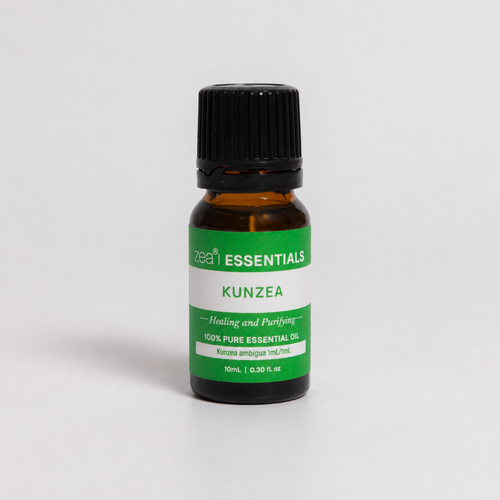
Kunzea oil is an essential oil steam distilled from the leaves and branchlets of Kunzea ambigua, a flowering shrub native to Tasmania and the south-eastern coast of mainland Australia. It belongs to the Myrtaceae family, the same botanical family as Tea Tree and Eucalyptus, but it has a distinctly different chemical profile and a softer, fresher aroma. The oil is grown and distilled in Tasmania, sourced from sustainable plantations as well as wild harvest.
Kunzea oil was formally recognised in Australia relatively recently. It is a comparatively recent arrival among Australian native essential oils, entering mainstream use decades after Tea Tree and Eucalyptus. Today it is best known as the active ingredient in topical products designed to support relief from muscle aches, joint discomfort and minor skin irritation, and as an aromatherapy oil with a clean, camphoraceous-woody scent.
Quick facts
- Botanical name: Kunzea ambigua (sometimes called White Cloud or Tick Bush)
- Plant family: Myrtaceae
- Origin: Native to Tasmania and coastal south-eastern Australia
- Extraction: Steam distillation of leaves and terminal branchlets
- Sourcing: Sustainable Tasmanian plantations as well as wild harvest
- Aroma: Fresh, clean, slightly camphoraceous with soft woody undertones
- Main uses: Topical comfort products, massage blends, aromatherapy
Where does Kunzea come from?
Kunzea ambigua grows naturally in the coastal heathlands of Tasmania, where the cool maritime climate and low-nutrient sandy soils produce plants with a high concentration of aromatic compounds. Bushmen in north-eastern Tasmania noticed decades ago that livestock and wildlife would shelter and bed down in Kunzea thickets, and the plant earned the local nickname "Tick Bush" because animals resting in it appeared to carry fewer ticks. That folk observation prompted the first distillations of the oil and, eventually, formal interest in its chemistry.

Commercial Kunzea oil today comes from Tasmania, where it is both cultivated in sustainable plantations and harvested from naturally occurring stands. Growers have also studied how harvest timing affects the finished oil: research from the University of Tasmania found that a shallow-cut harvest style increased regrowth and oil yield by around 1.9-fold compared with a deeper cut, and that the concentration of key bioactive compounds, 1,8-Cineole and Viridiflorol, peaked in oils distilled from autumn harvests1. The biomass is steam distilled soon after harvest, and the resulting oil is typically clear to pale yellow. Because Kunzea is still a small crop compared with Tea Tree or Eucalyptus, genuine Tasmanian Kunzea oil remains a specialty ingredient. Zea, a Certified B Corporation, built the world's first Kunzea-based product range around this ingredient, beginning as a family market stall in Tasmania in 2016.
What is in Kunzea oil? Key constituents explained
The character of any essential oil comes down to its chemistry. Kunzea oil is unusual because it combines a high proportion of monoterpenes with a significant fraction of sesquiterpene alcohols, a combination not found in most Australian native oils. The typical composition of Tasmanian Kunzea oil includes:
| Constituent | Typical proportion | What it is |
|---|---|---|
| Alpha-Pinene | ~35-50% | A monoterpene with a fresh pine-like aroma, widely studied for its role in plant-derived comfort applications |
| 1,8-Cineole | ~10-15% | Also called Eucalyptol; gives the oil its clean, slightly medicinal freshness and is well studied in respiratory and topical research |
| Globulol | ~5-10% | A sesquiterpene alcohol that contributes to the oil's soft, grounding base note |
| Viridiflorol | ~5-10% | A sesquiterpene alcohol also found in Niaouli; studied for its skin-soothing potential |
| Bicyclogermacrene | ~3-7% | A sesquiterpene common in Myrtaceae oils |
| Alpha-Terpineol | ~2% | A monoterpene alcohol with a soft lilac-like note, studied for its gentle skin compatibility |
Exact percentages vary batch to batch with season, rainfall and harvest site, which is normal for any genuine plant-derived oil1. Reputable suppliers verify each batch by gas chromatography.
The practical takeaway: the monoterpenes (Alpha-Pinene, 1,8-Cineole) provide the fresh, penetrating top notes and fast skin feel, while the sesquiterpene alcohols (Globulol, Viridiflorol) round the oil out and are associated with gentler, longer-lasting skin comfort. This blend of light and heavy molecules is a large part of why Kunzea suits topical comfort products so well.
What is Kunzea oil used for?
Kunzea oil is used in three main ways: in topical products that are listed on the ARTG (AUST L 360 331), in massage and body care, and in aromatherapy.
1. Topical comfort and recovery
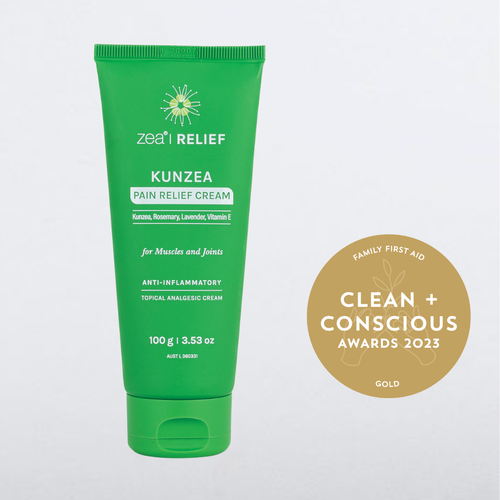
Kunzea's best-known modern use is as the active ingredient in topical creams and balms formulated to help relieve muscle aches and pains, support joint comfort and mobility, and promote recovery after exercise. In Australia, products making these claims must be listed with the Therapeutic Goods Administration (TGA)3. Zea's Kunzea Pain Relief Cream is a topical cream registered with the ARTG (AUST L 360 331), with Kunzea oil as a key active, developed specifically for temporary relief of muscular aches and soreness.
2. Massage and body care
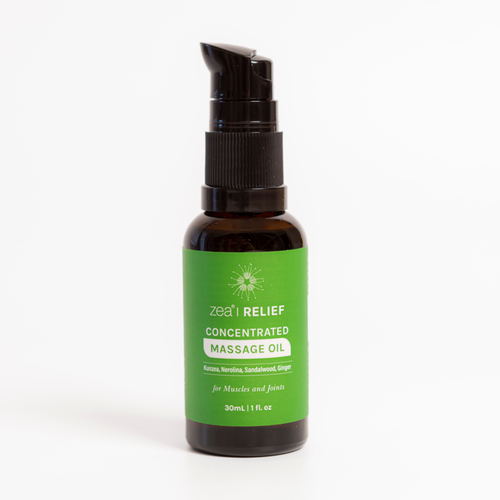
Diluted in a carrier oil, Kunzea is a popular choice for massage, particularly for tired legs, shoulders and lower backs after physical work or training. Its relatively low viscosity and fresh scent make it easy to blend, and it pairs well with Lavender, Rosemary and Peppermint. It shares its Tasmanian origin with Zea's single-origin Kunzea Honey, produced from the nectar of the same native shrub, a connection we cover in more depth in our piece on World Honey Bee Day and raw Australian honey.
3. Aromatherapy
Diffused, Kunzea has a clean, calming, bushland character. Many people use it to support relaxation and a sense of calm, or simply because it smells like the Tasmanian coast, alongside other oils in Zea's essential oils range. Aromatherapy use of botanical oils like this is well established as a complementary practice4, and Kunzea blends well with citrus and other Myrtaceae oils.

You can explore the full range of Kunzea-based products, from pure essential oil to creams and roll-ons, in the All Zea Kunzea Products collection.
Kunzea oil vs Tea Tree oil: an honest comparison
Kunzea and Tea Tree are cousins, not twins. Both are steam distilled Australian Myrtaceae oils, but they differ in chemistry, aroma and best use. Tea Tree (Melaleuca alternifolia) is dominated by Terpinen-4-ol, typically 35-48% of the oil, and its research base is heavily focused on antimicrobial applications: blemish-prone skin, minor cuts and scrapes, and household cleaning2. Kunzea's profile, led by Alpha-Pinene and 1,8-Cineole with sesquiterpene alcohols behind them, points it toward topical comfort and aromatherapy rather than antisepsis.
| Kunzea oil | Tea Tree oil | |
|---|---|---|
| Botanical source | Kunzea ambigua, Tasmania and south-eastern Australia | Melaleuca alternifolia, northern NSW and QLD |
| Dominant constituent | Alpha-Pinene (~35-50%) | Terpinen-4-ol (~35-48%) |
| Other key constituents | 1,8-Cineole, Globulol, Viridiflorol, Alpha-Terpineol, Bicyclogermacrene | Gamma-Terpinene, Alpha-Terpinene, 1,8-Cineole (kept low) |
| Aroma | Fresh, soft, woody-camphoraceous; generally considered gentler on the nose | Sharp, medicinal, strongly camphoraceous |
| Research focus | Topical comfort, skin soothing, aromatherapy | Antimicrobial and antifungal applications |
| Typical best use | Muscle and joint comfort products, massage, diffusion | Blemish care, minor wound cleansing, cleaning products |
| Scale of production | Small specialty crop, Tasmania | Large established industry, hundreds of tonnes per year |
Neither oil is "better". They do different jobs. If you want an oil for cleansing blemish-prone skin or adding to a homemade surface spray, Tea Tree's Terpinen-4-ol content is the right tool and it has decades of antimicrobial research behind it2. If you want an oil for a post-exercise rub, a bath blend for tired muscles, or a topical product to help relieve everyday aches, Kunzea's profile is the better fit. Many households keep both. For a full side-by-side breakdown, see our companion guide, Kunzea Oil vs Tea Tree Oil: Key Differences Explained.
One practical difference worth noting: Tea Tree's sharper aroma divides opinion, while Kunzea's softer scent tends to be easier to live with in massage blends and diffusers. Kunzea is also considerably rarer and usually more expensive per millilitre, simply because far less of it is produced. Some early research has also looked at Kunzea's insect-repellent properties, though the results were modest: one Tasmanian trial found Kunzea oil formulations gave comparable protection to 40% citronella against mosquitoes, but noticeably less than DEET, so it should not be relied on in areas where mosquito-borne disease is a real risk5.
Is Kunzea oil safe?
Used correctly, Kunzea oil has a good safety record. The same common-sense rules that apply to all essential oils apply here4:
- Always dilute for skin use. A 2-5% dilution in a carrier oil is typical for massage. Finished products like ARTG-listed creams are already formulated at appropriate levels.
- Patch test first. Apply a small amount of the diluted oil to the inner forearm and wait 24 hours before broader use.
- Do not ingest. Kunzea oil, like most essential oils, is for external and aromatic use only.
- Keep away from eyes and mucous membranes.
- Pregnancy, breastfeeding and medical conditions: consult your GP or pharmacist before use, as with any new topical product.
- Children and pets: keep pure essential oils out of reach and seek professional advice before use.
If you are managing ongoing pain or a diagnosed condition, topical products can play a supporting role but they are not a substitute for medical care. A structured approach helps; our guide to building a natural daily routine for joint comfort walks through how topical products, movement and heat can work together.
How to choose a quality Kunzea oil
Because Kunzea is a small specialty crop, quality varies. Look for:
- Botanical name on the label: it should say Kunzea ambigua, not just "Kunzea blend".
- Tasmanian origin: genuine Kunzea oil is grown and distilled in Tasmania.
- 100% pure, single-origin oil: no carrier oils or synthetic extenders unless clearly labelled as a pre-diluted product.
- Batch testing: reputable suppliers can provide gas chromatography data confirming the constituent profile.
- ARTG listing for therapeutic products: if a cream or balm makes pain relief claims in Australia, it must be registered with the ARTG and carry an AUST L number.
For a plain-English breakdown of Kunzea's constituents alongside every other ingredient we use, see the Zea Ingredient Glossary.
Frequently asked questions
What does Kunzea oil smell like?
Fresh, clean and slightly camphoraceous, with soft woody and earthy undertones. It is noticeably gentler on the nose than Tea Tree or Eucalyptus, which makes it a popular choice for massage blends and diffusion.
Is Kunzea oil the same as Tea Tree oil?
No. They come from different plants and have different chemistry. Tea Tree (Melaleuca alternifolia) is dominated by Terpinen-4-ol and is researched mainly for antimicrobial uses. Kunzea (Kunzea ambigua) is led by Alpha-Pinene and 1,8-Cineole with sesquiterpene alcohols, a profile better suited to topical comfort and aromatherapy.
Can Kunzea oil help with muscle aches?
Topical products containing Kunzea oil that are listed on the ARTG (AUST L 360 331) may help relieve muscular aches and pains and support joint comfort, which is what their ARTG listing permits them to claim. Always follow the directions on a listed product, and see your GP if pain persists.
Can I apply Kunzea oil directly to my skin?
Pure Kunzea essential oil should be diluted in a carrier oil before applying to skin, typically at 2-5% for adults. Finished products such as creams and roll-ons are already formulated at safe levels and can be applied as directed.
Where is Kunzea oil produced?
Commercial Kunzea oil comes from Tasmania, where Kunzea ambigua is grown in sustainable plantations and also harvested from natural stands, then steam distilled. It remains a small specialty crop compared with Tea Tree.
Is Kunzea oil safe during pregnancy?
Always consult your GP or midwife before introducing any new topical or aromatherapy product while pregnant or breastfeeding. They can advise on what is appropriate for your individual circumstances.
References
Sources open in a new tab so you do not lose your place.
- 1. Park C, Garland SM, Close DC. The Effect of the Height of Coppicing and Harvest Season on the Yield and Quality of the Essential Oil of Kunzea ambigua. Plants (Basel). 2022;12(1):20. University of Tasmania. View source
- 2. Carson CF, Hammer KA, Riley TV. Melaleuca alternifolia (Tea Tree) Oil: a Review of Antimicrobial and Other Medicinal Properties. Clinical Microbiology Reviews. 2006;19(1):50-62. View source
- 3. Therapeutic Goods Administration. Australian Register of Therapeutic Goods entry 360331. View source
- 4. healthdirect Australia. Aromatherapy. View source
- 5. Thomas J, Webb CE, Narkowicz C, et al. Evaluation of Repellent Properties of Volatile Extracts from the Australian Native Plant Kunzea ambigua Against Aedes aegypti. Journal of Medical Entomology. 2009;46(6):1387-91. University of Tasmania. View source